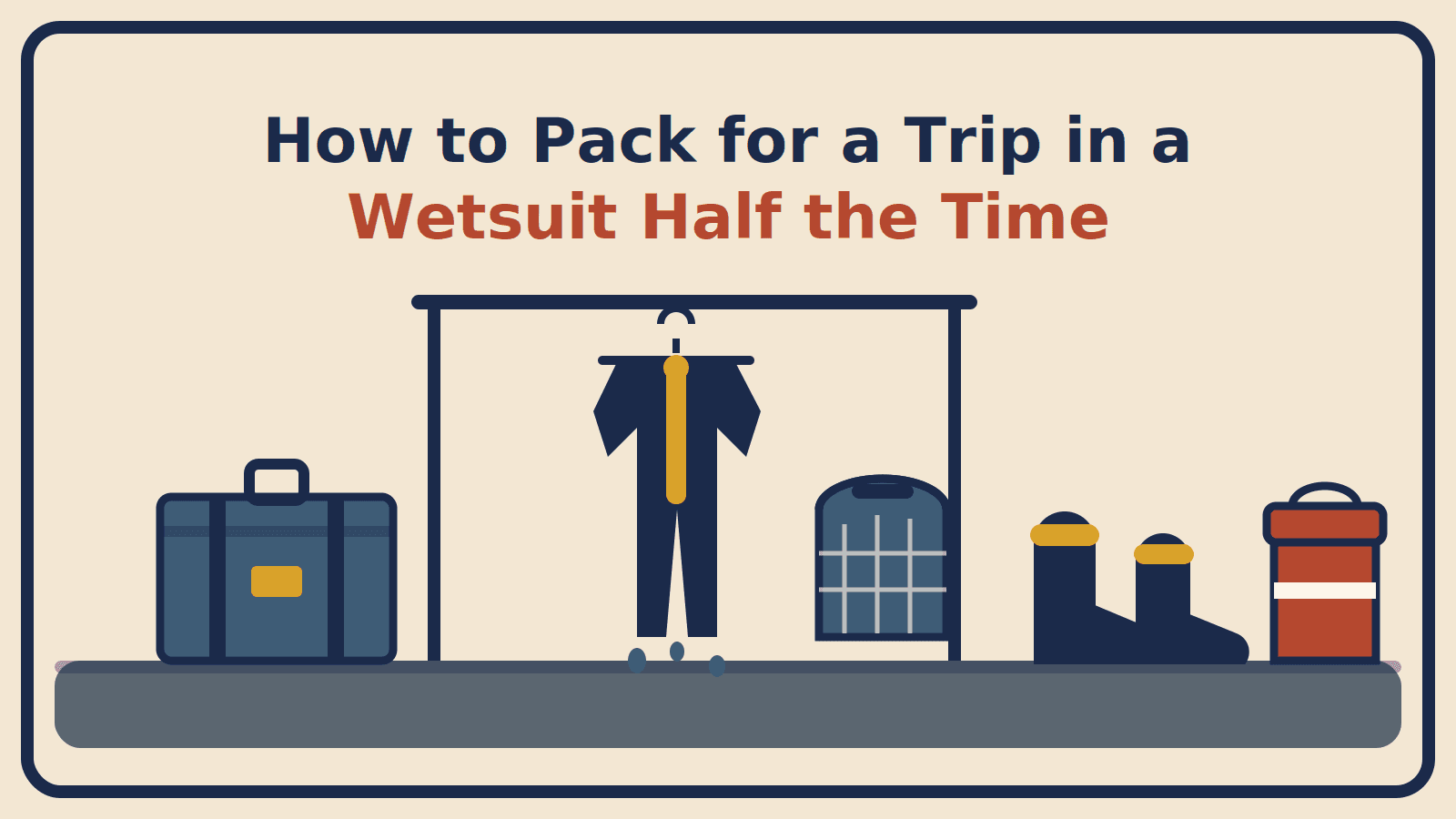
How to Pack for a Trip Where You'll Be in a Wetsuit Half the Time
August 15, 2026 · 6 min read
Prefer us on GoogleA trip built around water inverts normal packing. The wetsuit is the heaviest item you own, the slowest to dry, and the thing most likely to make everything near it damp. Build the bag around it, then cut your dry-land clothing to a repeatable minimum.
Quick Answer
- A wetsuit matched to the water temperature, not the air temperature
- A mesh or vented wet bag so it can breathe between sessions
- A separate dry bag for the things that must stay dry
- Two rash guards, since one will always be drying
- Neoprene boots, gloves or a hood if the water is cold enough to need them
- A changing mat or towel poncho, so you are not standing on gravel in bare feet
- A quick-dry towel, which packs smaller and dries faster than cotton
- Something warm for immediately after the water: a fleece and a warm hat
- Two swimsuits to wear under the suit, so one can dry
- Dry-land clothing cut to a repeatable base, since you will wear it less than you think
- Wetsuit shampoo or just fresh water, plus a hanger with broad shoulders
- Anti-chafe balm, ear drops if you are prone to problems, and reef-safe sunscreen
Why the wetsuit sets the rules
On a normal trip, clothing is the bulk of the bag. On a wetsuit trip, one item dominates: a 4/3mm full suit is heavy, awkward, and can take more than a day to dry properly, especially in humid coastal air. Everything else in the bag has to accommodate that.
Three consequences follow. First, the wetsuit needs its own container, and ideally a vented one. A mesh bag lets air move through, which a sealed bag does not, and a sealed dry bag should be a last resort for transport rather than storage. Second, you need a drying plan for each place you stay, since a suit left crumpled in a bag overnight comes out cold, damp and smelling of the last three sessions. A broad-shouldered hanger is worth the space, because thin wire hangers stretch the shoulders over time.
Third, and least obvious: your dry-land wardrobe shrinks. If you are in the water twice a day, you spend far less time in normal clothes than you assumed at home. A repeatable base of two or three outfits usually covers a week, and the space saved goes to the gear that actually gets used.
The other half of the problem is the transition, the ten minutes on either side of the water. That is when people get cold, cut their feet, and lose their car keys. A changing mat or towel poncho, boots you can walk to the water in, and a fleece plus a warm hat within reach at the end of a session all do more for the trip than another shirt. Post-session cold is more severe than most first-timers expect, because you have been losing heat steadily for an hour or more.
Two rash guards and two swimsuits are worth the small space they take, since anything worn under a wetsuit gets wet every single time and one item will always be drying. The same logic about water shoes, dry bags and quick-dry fabrics runs through our Florida Keys packing list, which covers the warm-water version of this problem.
Common Mistakes
People pack the wetsuit like clothing. In practice it needs a vented bag of its own, because sealed against dry clothes it makes everything damp and stale.
People pack for air temperature. In practice water temperature decides the suit, because immersion strips heat far faster than a warm afternoon adds it.
People bring a full dry-land wardrobe. In practice you wear far less of it than expected, because half your waking hours are spent in neoprene or recovering from it.
People plan for getting in the water. In practice the getting-out is what catches people, because that is when the cold, the sharp ground and the fumbling happen.
People assume a rental suit will be fine. In practice fit is most of what keeps a suit warm, because a loose suit flushes cold water through it continuously.
Water temperature, not air temperature
The number that should drive your packing is the water temperature at your destination, and the reason is physical: water pulls heat from the body roughly 25 times faster than air. That is why a bright, warm day over cold water still calls for a thick suit, and why spring trips catch people out so reliably.
The rough industry mapping runs like this: 2mm or just a rash guard above about 68F, 3/2mm for roughly 62 to 68F, 4/3mm for roughly 58 to 62F, 5/4mm for roughly 52 to 58F, and a hooded 5/4 or 6/5 below that, with boots from around 58F, gloves from around 52F and a hood below about 52F.
Treat those numbers as directional rather than exact, because the published charts genuinely disagree. One major brand puts 3/2mm at 59 to 65F, another at 62 to 68F, and a third stretches it to 55 to 64F. Those overlaps are not a rounding problem, they reflect different assumptions about session length, wind and personal tolerance. The practical rule most sources converge on is to size up one category if you feel the cold, if you are coming off illness, or if your sessions run long, since you can always unzip in the water but you cannot add neoprene.
Two related factors shape the bag. Session length matters, because a suit that is comfortable for an hour can be miserable over three. And air temperature still matters at the edges, since a cold morning means you enter the water already chilled, which is an argument for that fleece and warm hat being accessible rather than buried.
A trip where one bag has to cover neoprene, a drying problem, a cold transition and a few days of ordinary clothes is a genuine constraint problem rather than a beach holiday. That kind of overlap is what JetKit is built to reason through, so what you pack matches the trip you are actually taking.
Frequently Asked Questions
How do I pack for a trip where I'll be in a wetsuit most days?
Build the bag around the wetsuit rather than around clothing. It is the heaviest item, the slowest to dry, and the one that will make everything near it damp. Give it a mesh or vented bag of its own, plan where it will dry each day, and cut your dry-land clothing to a repeatable minimum.
What wetsuit thickness do I need for my destination?
It depends on water temperature, not air temperature. As a rough guide, 2mm suits water above about 68F, 3/2mm covers roughly 62 to 68F, 4/3mm covers roughly 55 to 62F, and 5/4mm with boots below that. Brand charts disagree by several degrees, so check your destination's actual water temperature and size up if you feel the cold.
How do I stop a wet wetsuit from ruining everything else in my bag?
Never pack it wet against dry clothing. Use a dedicated mesh or vented wet bag so it can breathe, or a sealed dry bag if you have no choice, and get it out and hanging as soon as you arrive. Pack a second smaller dry bag for genuinely dry items you cannot afford to get damp.
Should I bring my own wetsuit or rent one?
Bring your own if you own one that fits, since fit is most of what makes a suit warm and rental sizing is a lottery. Renting makes sense for a single session, an unusual thickness you would not otherwise buy, or a trip where baggage limits are tight. Rental suits are also often thinner than advertised.
What do people forget on a wetsuit trip?
A changing mat or towel poncho, spare rash guards, and something warm for immediately after the water. Post-session cold hits harder than expected, so a warm hat and a fleece near the top of your bag matter more than another dry-land outfit.
Related
More in Building a Travel Wardrobe.