How to Pack for a Trip When You Don't Know the Weather Yet
July 22, 2026 · 4 min read
Prefer us on GoogleCheck seasonal temperature averages for your destination months ahead, since a real forecast won't be reliable until about a week out, then build a layering system, a base layer, a mid layer, and a versatile jacket, that flexes across whatever range those averages suggest.
Quick Answer
- Check seasonal averages for your destination and dates, searchable months in advance
- Build a layering system, base layer, mid layer, versatile jacket, instead of one fixed outfit
- Pack versatile, neutral-palette pieces to cut decision fatigue while packing and on the trip
- Cover hot, cold, and rainy weather lightly rather than committing fully to just one category
- Don't wait for a firmer forecast, the layering approach holds up regardless of what shows up
Why guessing leads to overpacking
Packing weeks or months ahead of a trip means packing before the forecast exists yet, and the instinct to solve that uncertainty by throwing in one of everything is exactly how a five-day trip turns into an overstuffed suitcase for every possible sky. There's a better approach, and it starts before you touch a single piece of clothing.
Checking seasonal trends on search engines works better than waiting for a forecast that won't be reliable until a week out anyway. Average temperatures and typical conditions for your destination and travel dates are searchable months in advance, and while they won't tell you the exact weather on day three, they tell you the realistic range you're actually packing for, which is the information that matters at this stage. Pairing that with a quick list of what you'll actually be doing, hiking, a city walking tour, a beach afternoon, matters too, since different activities call for different pieces regardless of what the temperature says.
Layering is the practical answer to not knowing the exact day-to-day conditions. A lightweight, breathable base layer, a long-sleeve or light sweater for cooler stretches, and one versatile jacket cover a wider range than any single "right" outfit could, because you're not betting on one specific weather scenario, you're building a system that flexes across whatever actually shows up.
Common Mistakes
People assume packing one of everything is the safest response to an unknown forecast. In practice, a layering system, base layer, mid layer, versatile jacket, covers more range with less bulk than trying to prepare a separate outfit for every possible weather scenario.
People assume single-purpose items are worth the space just in case. In practice, versatile pieces cut decision fatigue more effectively, a pair of black leggings that works dressed up or down, or a scarf that layers for warmth or just finishes an outfit, mean fewer decisions every morning about what goes with what.
People assume rain or cold gear needs to be bulky to be useful. In practice, the same packable rain shell that handles a surprise shower in a warm-climate city works over a sweater if temperatures drop further than expected, so neither a rain jacket nor a warm layer needs to be single-use.
People assume waiting for a more reliable forecast is worth delaying packing decisions. In practice, even a week out, forecasts shift, so the layering-and-versatility approach holds up regardless of whether the actual week turns out sunnier or wetter than expected.
Building the three weather categories
The destination-research-first approach, the layering strategy, the versatile-pieces and neutral-palette recommendation, and the hot, cold, and rainy weather category breakdown are drawn from Bag Lady Meredith San Diego's multi-climate packing guide.
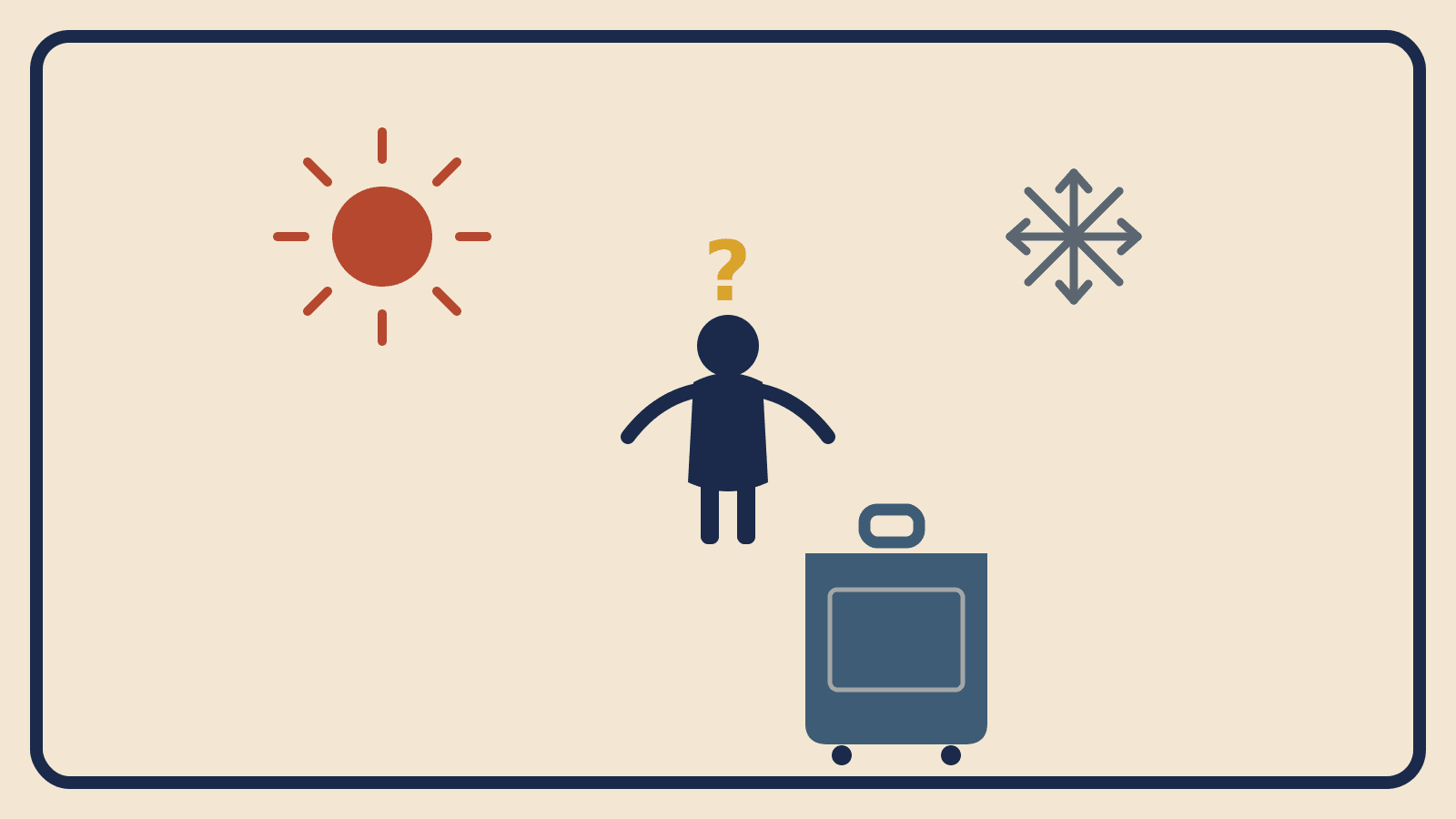
A useful way to think about it: build three small mental categories, hot weather with breathable fabrics, a sun hat, and sunscreen, cold weather with a base layer, a warm layer, and gloves if truly needed, and rainy weather with a packable shell and quick-dry pants, and pack the lightest version of each rather than committing fully to just one. You won't need everything from every category, but not knowing which category will dominate is exactly the problem this solves.
If the destination in question spans multiple stops with genuinely different climates, our European multi-city fall guide covers that specific version of this problem in more depth.
Whatever the forecast ends up doing, JetKit builds the packing list around your closet and your trip so the layering and category-based thinking above are already sorted before you start folding.
Frequently Asked Questions
How do I pack for a trip if I don't know the weather yet?
Check seasonal temperature trends and typical conditions for your destination and travel dates, since these are searchable months in advance even without a reliable forecast. Then build a layering system, a base layer, a mid layer, and a versatile jacket, that flexes across whatever range those averages suggest.
Should I wait for a firmer forecast before packing?
No, even a week out, forecasts shift, so a layering-and-versatility approach holds up regardless of whether the actual week turns out sunnier or wetter than expected. It's a better use of planning time than refreshing a weather app hoping for certainty that isn't coming.
What are the three weather categories to pack for when the forecast is unknown?
Hot weather, breathable fabrics, a sun hat, and sunscreen, cold weather, a base layer, a warm layer, and gloves if truly needed, and rainy weather, a packable shell and quick-dry pants. Packing the lightest version of each covers the uncertainty better than committing fully to just one.
Do versatile clothing pieces help when packing without a known forecast?
Yes, significantly. A pair of black leggings that works dressed up or down, a scarf that layers for warmth or finishes an outfit, and pieces from the same neutral color palette all reduce decision fatigue, both while packing and once you're actually on the trip.
How far in advance can I check weather for packing purposes?
Average temperatures and typical conditions for a destination and travel dates are searchable months ahead, well before a specific forecast becomes reliable. They won't predict the exact weather on day three, but they establish the realistic range worth packing for.
Related
More in Packing for Weather.
- Packing for a Trip With Wildly Different Weather (Mountains + City)
- How to Choose a Travel Jacket That Actually Works for Multiple Climates
- How to Pack for a Trip With Two Very Different Climates in One Bag
- How to Pack for a Trip That Starts Cold and Ends Warm
- How to Pack for a Trip When the Forecast Keeps Changing Every Day