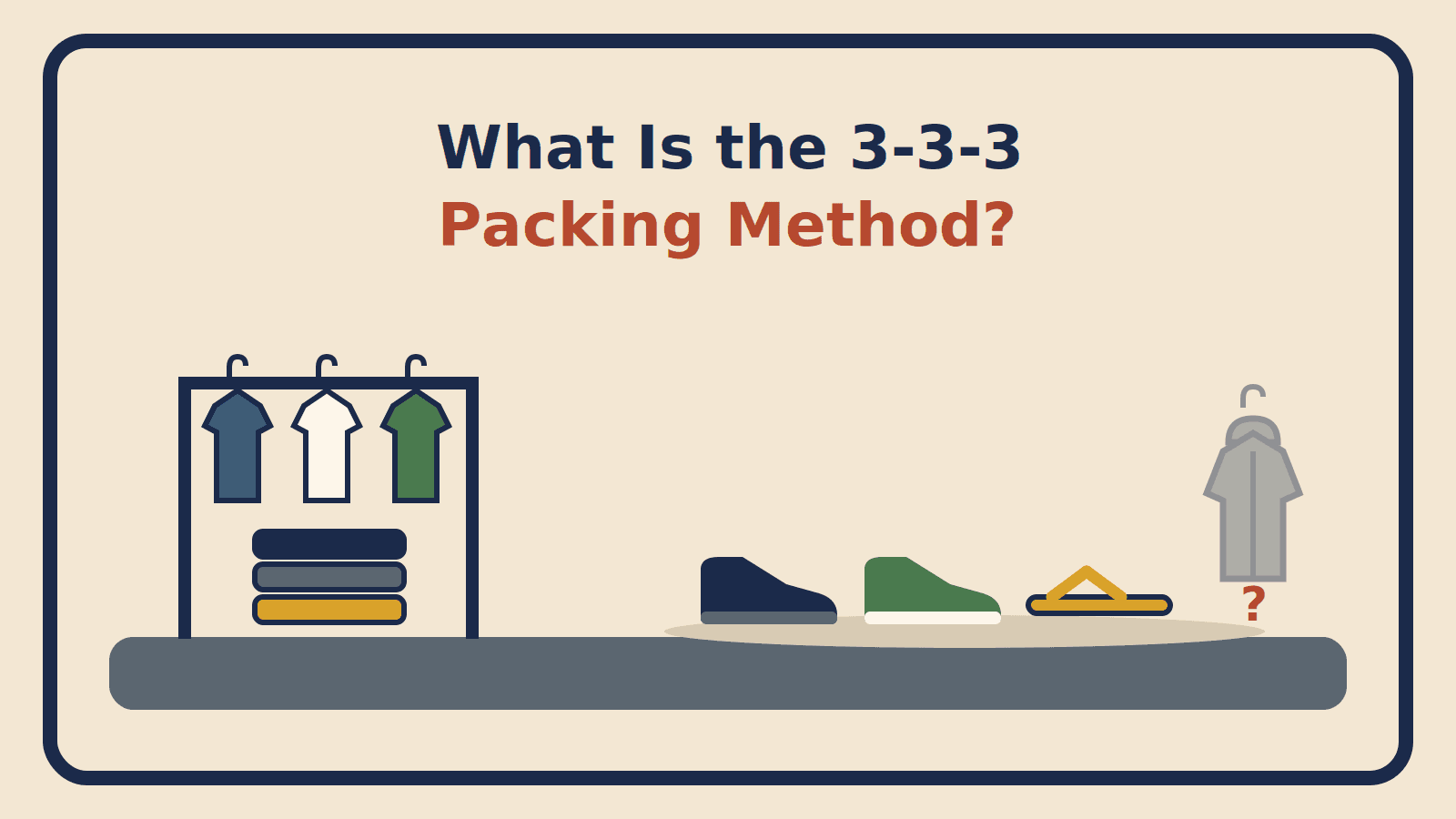
What Is the 3-3-3 Packing Method?
September 21, 2026 · 5 min read
Prefer us on GoogleThe 3-3-3 packing method means packing three tops, three bottoms, and three pairs of shoes, all from one coordinating palette so every piece works with every other. It went viral on TikTok as a carry-on hack. The popular claim is 27 outfits. The realistic number is nine, and that is still enough for most trips under a week.
Quick Answer
- Pack 3 tops, 3 bottoms, and 3 pairs of shoes: nine pieces in total.
- Underwear, socks, and sleepwear sit outside the count.
- Choose one neutral palette so any top pairs with any bottom.
- Expect about 9 distinct outfits, not the 27 often quoted.
- Best fit: carry-on trips of roughly three to seven days in mild weather.
- Add outerwear separately if the forecast is uncertain.
Where the 3-3-3 Method Came From
The 3-3-3 method is credited to TikTok creator Rachel Spencer, who built it to pack for a trip to London. It spread quickly because it is easy to remember and easy to check. You can count nine pieces on a bed in ten seconds.
The name causes some confusion. Project 333 is a different idea: a minimalism challenge built around 33 items worn for three months, meant for everyday life at home. The 3-3-3 packing method borrows the spirit but is purely a travel rule, and it is far smaller.
Why the 3-3-3 Method Works
The method works because it forces a decision most packers avoid. With only three tops and three bottoms, each piece must match all the others. A shirt that only works with one pair of pants fails the rule on sight, so the clashing "just in case" pieces never make it into the bag.
The outfit count comes from multiplication, not from volume. Three tops paired with three bottoms produce nine combinations, which is why a small number of coordinating pieces goes further than a large number of standalone outfits.
Rewear is built into the design. On any trip longer than three days, you will wear each top more than once. That is the point of the method, not a flaw in it, and it is why fabrics that resist odor and wrinkles matter more here than in a bigger wardrobe.
The 27-Outfit Claim, Checked
Published counts for the same nine pieces do not agree. Several articles promise 27 outfits. One widely shared creator video shows 21. A writer at Apartment Therapy who tried the method for a carry-on trip put it more carefully: at least nine outfits, or 27 if you count every shoe option.
The 27 figure is correct arithmetic: three times three times three. The problem is that a shoe swap rarely reads as a new outfit to anyone looking at you. Not every shoe works with every combination either; sandals with dinner pants may not suit the evening you planned.
The honest count is nine, and nine is plenty. It covers nine days without repeating a top and bottom pairing, which is longer than most trips this method is designed for.
What the 3-3-3 Method Leaves Out
The rule counts only core outfit pieces. It says nothing about warmth or rain, and that gap matters on any trip with unpredictable weather.
A hiking-focused travel blogger who packs this way argues the rule assumes mild weather and adds three outer layers to it: a raincoat, a puffer jacket, and a sweater. That adjustment keeps the outfit logic intact while adding the weather protection the original rule skips.
Formal events need a similar adjustment. If a trip includes a wedding or a client dinner, make one top, one bottom, and one pair of shoes the dressy option, and confirm those three still pair with at least one other piece each.
The Shoe Problem
The 3-3-3 method cuts tops and bottoms hard but keeps three pairs of shoes, the same number most versions of 5-4-3-2-1 allow. Shoes take up more room per item than anything else in a carry-on, so the rule trims the categories that take the least space and keeps the one that takes the most.
The practical fix is to wear your bulkiest pair while traveling and pack the other two. If your trip only needs two pairs, pack two. The method works just as well as 3-3-2.
Common Mistakes
People assume the method delivers 27 looks. In practice it delivers about nine, because changing shoes rarely makes an outfit look different.
People assume any three tops will do. In practice one statement top that only pairs with a single bottom breaks the math, because the method depends on every piece combining with every other.
People assume the nine pieces are the whole bag. In practice underwear, socks, sleepwear, and weather layers are packed separately, because the rule only counts the pieces that form outfits.
People assume the rule scales to a two-week trip unchanged. In practice anything past about a week needs laundry or more pieces, because three tops worn repeatedly, especially in heat, need washing.
3-3-3 vs 5-4-3-2-1
The two methods share the same logic at different sizes. The 3-3-3 method uses nine pieces and suits short carry-on trips. The 5-4-3-2-1 method uses roughly fifteen pieces and suits a week or longer, with more room for layers and accessories.
If your trip runs longer than a week or includes more varied plans, the 5-4-3-2-1 packing method gives you more combinations without abandoning the coordinate-everything discipline.
JetKit includes 3-3-3 as one of its packing methods. It picks the three tops and three bottoms from your own closet and checks that the pairings actually work, which is the step the rule otherwise leaves to you.
Frequently Asked Questions
What is the 3-3-3 packing method?
The 3-3-3 packing method means packing three tops, three bottoms, and three pairs of shoes for a trip. Every piece is chosen from one coordinating color palette so any top works with any bottom. Underwear, socks, and sleepwear are packed separately and do not count toward the nine pieces.
Does the 3-3-3 method really give you 27 outfits?
Only on paper. Three tops times three bottoms times three shoes equals 27, but swapping shoes rarely makes an outfit look new to anyone seeing it. The realistic count is nine distinct top and bottom combinations, which still covers nine days without repeating a look.
Who created the 3-3-3 packing method?
The 3-3-3 packing method is credited to TikTok creator Rachel Spencer, who used it to pack for a trip to London. It is often confused with Project 333, a separate minimalism challenge built around 33 items worn for three months.
Is the 3-3-3 method better than the 5-4-3-2-1 method?
It is better for shorter trips. The 3-3-3 method uses nine pieces and suits carry-on trips of roughly three to seven days, while 5-4-3-2-1 uses about fifteen pieces and suits a week or longer. Both depend on everything coordinating, so the right choice comes down to trip length and laundry access.
Related
More in Building a Travel Wardrobe.