Why You Should Pack Fewer Shoes Than You Think You Need
July 27, 2026 · 4 min read
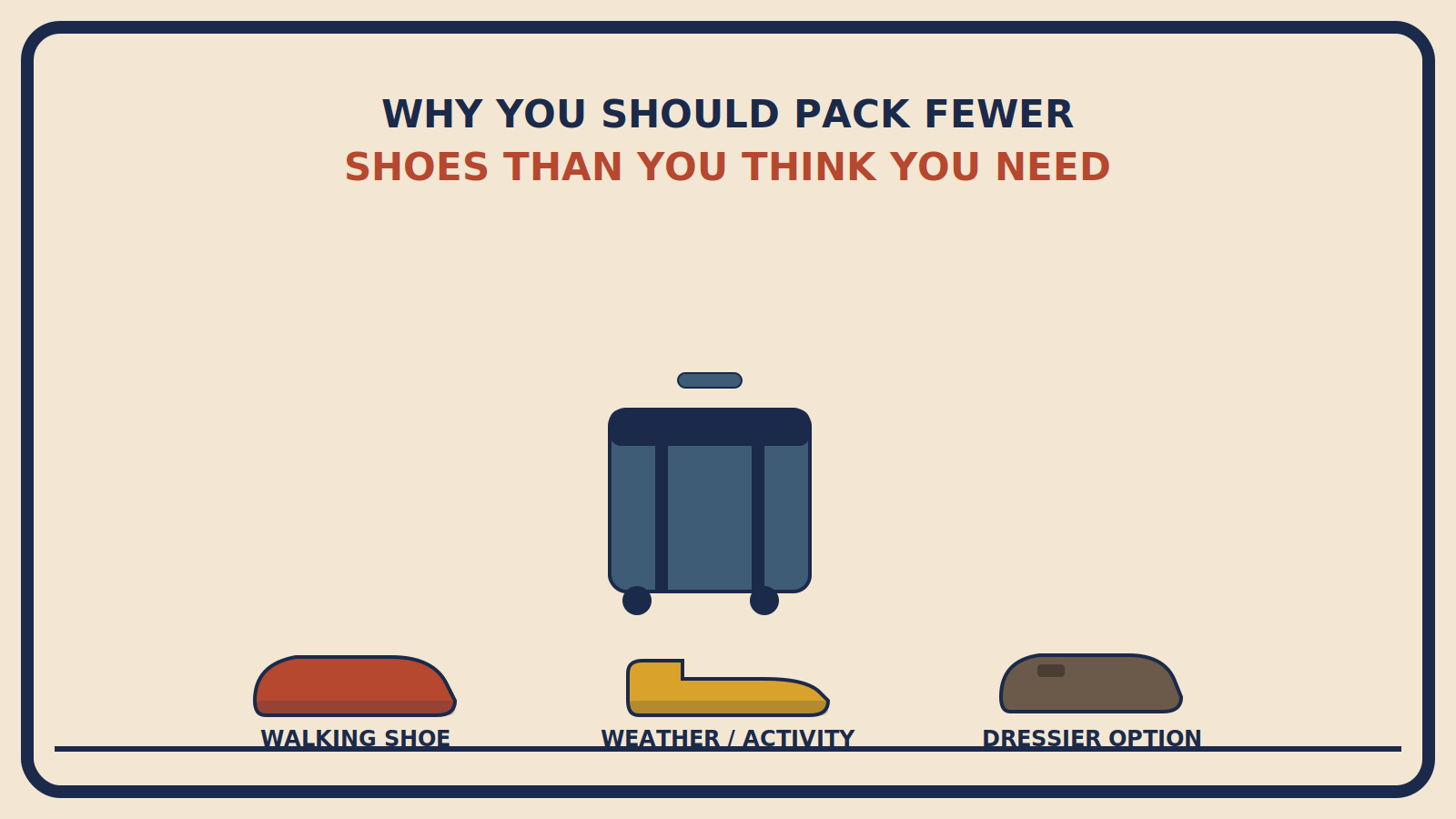
Space is limited, especially in carry-on luggage, and shoes are the worst offender in the whole bag. Three pairs, a walking shoe, a weather- or activity-appropriate pair, and a dressier option, cover nearly every real scenario a trip throws at you. Going beyond that is almost always solving for a hypothetical outfit rather than an actual planned one.
Quick Answer
- Three pairs cover nearly every trip: walking shoe, weather/activity shoe, dressy option
- Shoes don't compress, so one extra pair can cost the space of several shirts
- Pick pairs versatile enough to match multiple outfits, not one "best" shoe per outfit
- Wear your bulkiest pair while traveling instead of packing it
- Skip the "emergency" fourth pair; most destinations sell replacements if needed
Why Shoes Cost More Suitcase Space Than Anything Else
Shoes are almost always the first thing to get cut from a packing list under pressure, and also the thing people overpack most when they're not under pressure. The instinct to bring one more pair "just in case" is understandable, shoes are bulky, hard to compress, and genuinely annoying to be without the right one. But most travelers land on far more pairs than a trip actually needs, and the fix is less complicated than it feels.
Space is limited, especially in carry-on luggage, and shoes are the worst offender in the whole bag. Unlike clothing, shoes don't compress, don't roll thin, and don't fit efficiently around other items unless you're deliberate about it. A single extra pair can eat the space of several shirts, which makes shoes one of the highest-cost items per square inch of suitcase you'll pack. That math alone is reason enough to think harder about each pair before it goes in the bag.
Why Three Pairs Is Usually Enough
The three-shoe approach that shows up again and again among frequent travelers solves this cleanly: one comfortable walking shoe or sneaker for general exploring, one weather- or activity-appropriate pair (sandals for a beach trip, boots for cold or wet weather), and one dressier option for anything nicer. Three pairs cover nearly every real scenario a trip throws at you, and going beyond that is almost always solving for a hypothetical outfit rather than an actual planned one.
Focus on what you can bring and use on multiple occasions, that's really the filter that makes three pairs enough instead of feeling like a compromise. A clean pair of leather sneakers can handle daytime walking and a casual dinner. A pair of ankle-strap flats or loafers can bridge sightseeing and a nicer evening out. The goal isn't finding the single "best" shoe for every outfit, it's picking pairs versatile enough that most outfits already match at least one of them, so you're never packing a fourth pair just because one planned outfit doesn't pair with anything you brought.
Common Mistakes
People pack a new pair for every outfit they've planned instead of choosing versatile ones. In practice, a shoe that pairs with multiple outfits does more work than a "perfect" shoe that only matches one, which is exactly what keeps the count at three instead of five.
People pack their bulkiest shoes instead of wearing them. In practice, wearing the bulkiest pair while traveling is free space you don't have to account for in the suitcase, and packing the remaining pairs first, along the bottom or sides, fits them more efficiently than squeezing them in as an afterthought.
People pack a spare "emergency" pair just in case one fails. In practice, most destinations have somewhere to buy a replacement if a shoe genuinely fails mid-trip, so carrying a whole extra pair for a rare scenario usually costs more suitcase space than the risk justifies.
Don't overthink it beyond that point. The three-shoe structure isn't a rigid rule so much as a decision-making shortcut. Once you've got a walking shoe, a situational pair, and a dressier option, additional debate about a fourth or fifth pair is rarely solving a real problem. It's usually just packing anxiety dressed up as preparation.
If shoes are the piece of the puzzle you find hardest to narrow down, it's worth applying the same versatility filter to the rest of the outfit planning too, the fewer standalone pieces in a trip's wardrobe, the easier the shoe math gets. This piece on travel-friendly shoes and style goes deeper into picking pairs that actually earn a spot in the bag rather than defaulting to the safest-feeling choice.
Frequently Asked Questions
How many pairs of shoes should I pack for a trip?
Three, for nearly every trip: one comfortable walking shoe or sneaker for general exploring, one weather- or activity-appropriate pair like sandals or boots, and one dressier option for anything nicer. Going beyond that is almost always solving for a hypothetical outfit rather than an actual planned one.
Why do shoes take up so much suitcase space?
Unlike clothing, shoes don't compress, don't roll thin, and don't fit efficiently around other items unless you're deliberate about it. A single extra pair can eat the space of several shirts, making shoes one of the highest-cost items per square inch you'll pack.
How do I pick which three pairs of shoes to bring?
Focus on what you can use on multiple occasions. A clean pair of leather sneakers can handle daytime walking and a casual dinner. A pair of ankle-strap flats or loafers can bridge sightseeing and a nicer evening out. The goal is pairs versatile enough that most outfits already match at least one of them.
Should I wear my bulkiest shoes or pack them?
Wear them while traveling rather than packing them. That's free space you don't have to account for in the suitcase. Pack the remaining pairs first, lined along the bottom or sides of the bag, since shoes are easier to fit efficiently when they go in early rather than getting squeezed in as an afterthought.
Should I pack an extra pair of shoes just in case one fails?
Usually not, even on a longer trip. If a shoe genuinely fails mid-trip, most destinations have somewhere to buy a replacement. Carrying a whole extra pair for a scenario that rarely happens costs more real suitcase space than the risk justifies.
JetKit is an AI app that builds your packing list automatically based on your closet and your trip.