How Many Outfits for a Business Trip? (The Count and Which Ones)
November 17, 2026 · 4 min read
By James Galitsis, Founder of JetKit
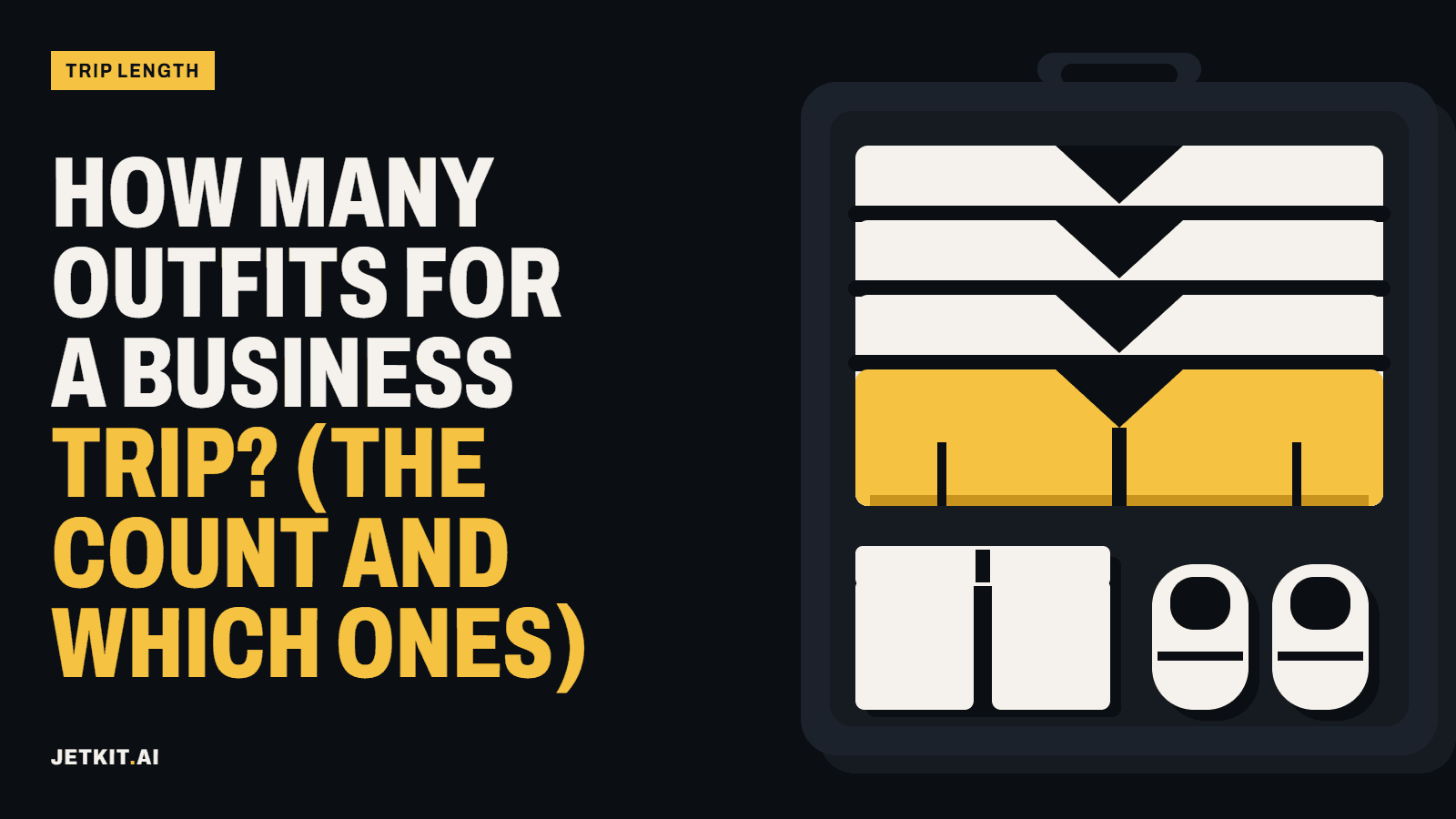
Prefer us on GoogleA 3-night business trip packs on the 3-2-1 formula: three tops, two bottoms, one pair of shoes and a jacket, seven garments that make six outfits, plus one spare top because there is no laundry. A business trip changes one thing: dress shirts go one a day, so the tops rotate and the bottoms and shoes repeat.
Quick Answer
- 3 tops, 2 bottoms, 1 pair of shoes: the 3-2-1 formula for three nights or fewer
- Six outfits from seven garments, since three tops against two bottoms is six
- One spare top, so four shirts for four travel days with no laundry
- Dress shirts go one a day; the bottoms and shoes are what repeat
- One layer that reads as a blazer, worn on the plane
- Four sets of underwear and socks, one per travel day
Why a business trip is 3-2-1 with the tops doing the work
Three nights is inside the shortest band, so the count comes from 3-2-1: three tops, two bottoms, one pair of shoes and one layer. Three tops against two bottoms is six combinations for four travel days. With no laundry the top count is lower than the travel days, so the formula adds one spare, which on a business trip is the fourth shirt. Where the ladder sits for a longer trip is in our hub on how many outfits you need by trip length.
The difference from a casual three nights is which category tracks the calendar. On a casual trip the tops are worn twice and the bottoms several times; on a business trip the shirts go one a day, because collars and cuffs show a day's wear in a way a tee does not, while the trousers and the one pair of shoes repeat under a different shirt without anyone noticing. So the six outfits are six shirts-and-trousers pairings, and the pairing is what reads as a new look each morning.
The layer is the piece that makes the six look like business: one blazer or structured jacket that sits over all four shirts and works with both bottoms, worn on the plane because it is the item that least wants a suitcase. The same four-pieces-over-everything logic is what the apps in best packing apps for frequent business travelers try to automate, and it is the piece of the list most worth getting right before the trip.
Common Mistakes
People assume a business trip needs an outfit per meeting. In practice it needs a shirt per meeting, because the trousers and shoes repeat under a fresh shirt and the pairing is what changes.
People assume the spare top is optional on a short trip. In practice it is the fourth shirt, because a coffee on the first morning otherwise costs a meeting day's shirt with no way to wash it.
People assume two pairs of shoes are safer. In practice one pair that works with both bottoms covers three nights, because the second pair is the bulkiest item in a carry-on and the one most often brought home unworn.
People assume the blazer goes in the bag. In practice it goes on, because a packed jacket arrives creased and a worn one arrives ready for the first meeting.
Which outfits, not just how many
Six outfits from seven garments, each one presentable, is a narrower problem than a casual six: every shirt has to work with both trousers, the shoes with both, and the blazer over all four shirts, in a palette that reads as one wardrobe across three days of the same people. That is the selection JetKit does from your own closet: give it three nights and a business purpose and it names the shirts, trousers, shoes and jacket you own that combine, then shows the outfits meeting by meeting. Why fewer garments make more outfits is explained once in the trip-length hub.
A business trip is a short count with a high bar for every piece. JetKit picks the pieces from the ones already in your closet.
Frequently Asked Questions
How many outfits do I need for a 3-day business trip?
Six outfits from seven garments: three tops, two bottoms, one pair of shoes and a jacket, the 3-2-1 formula for trips of three nights or fewer, plus one spare top since there is no laundry. The tops are the working count on a business trip, because dress shirts go closer to one a day; the two bottoms and one pair of shoes carry every meeting.
Do I need a different outfit for every meeting day?
A different shirt, not a different outfit. Collars and cuffs show a day's wear in a way a tee does not, so the tops rotate daily; the two bottoms and the one pair of shoes repeat without anyone noticing, which is what makes three tops against two bottoms six distinct looks.
How many dress shirts should I pack for a business trip?
One per meeting day plus the formula's spare: four for three nights. T-shirts go four to a week; dress shirts go closer to one a day, and the reason is collars and cuffs rather than sweat, which is why the top count is the one number on a business trip that does track the days.
Should I pack a second pair of shoes for a business trip?
Only if the trip has a day the first pair cannot do. One pair of shoes that works with both bottoms covers three nights of meetings and dinners; a second pair is the bulkiest thing in a carry-on and the item most often brought home unworn.
Related
More in Packing by Trip Length.